 Catalogue GéoSAS
asNeeded
Type of resources
Available actions
Topics
Keywords
Contact for the resource
Provided by
Years
Formats
Representation types
Update frequencies
status
Scale
Resolution
-

Les barrages sont à l’origine de modifications significatives du régime hydrologique, de la température de l’eau et des flux biologiques et biogéochimiques. C’est le cas des barrages de Vezins et de la Roche qui Boit, présents sur le cours principal de la Sélune, et d’autres plus petits obstacles qui fragmentent le bassin versant de la Sélune. Cette couche représente les barrages hydroélectriques de la Sélune, avec les batiments associés, en lien avec la production électrique. La géométrie de ces polygones est issue de plusieurs sources : BD Topo, OpenStreetMap (de 2019), complétée par photointerprétation. Des informations extraites du livre « Quand les rivières reprennent leur cours – Notes sur l’effacement de barrages et de seuils, sur la Sélune et ailleurs » ont été ajoutées pour décrire l'état (en service ou arasé), la nature et les caractérisques physiques de ces barrages.
-
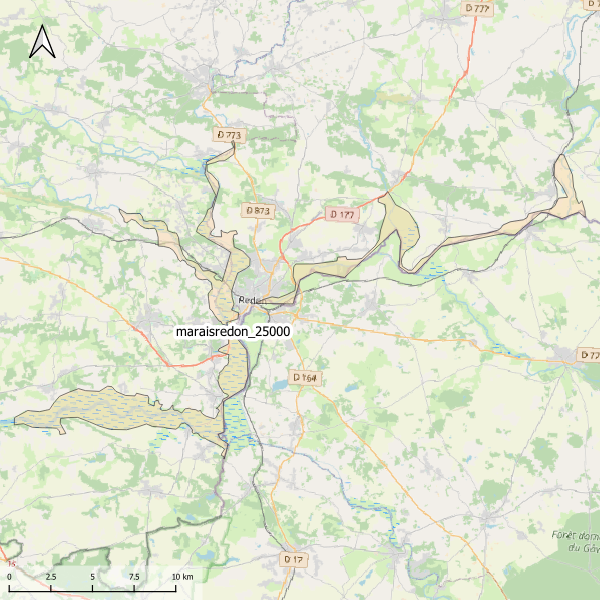
Emprise de la carte pédologique du Marais de Redon au 1/25000. La donnée de base, au format image scannée, n'est pas publiée.
-
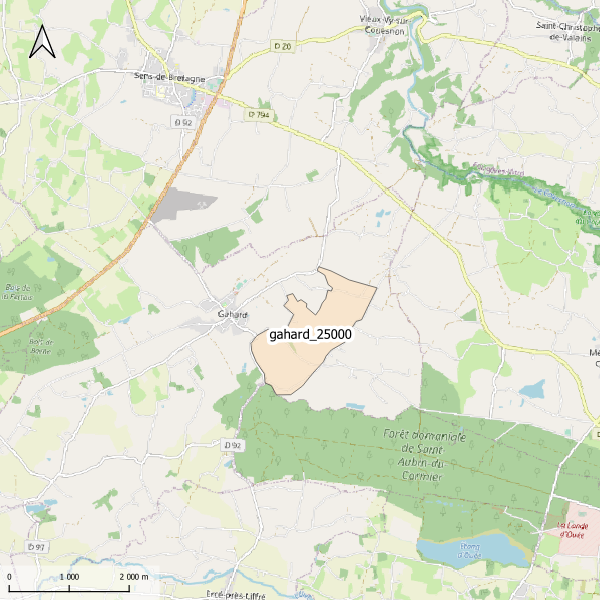
Emprise de la carte pédologique de Gahard au 1/25000. La donnée de base, au format image scannée, n'est pas publiée.
-
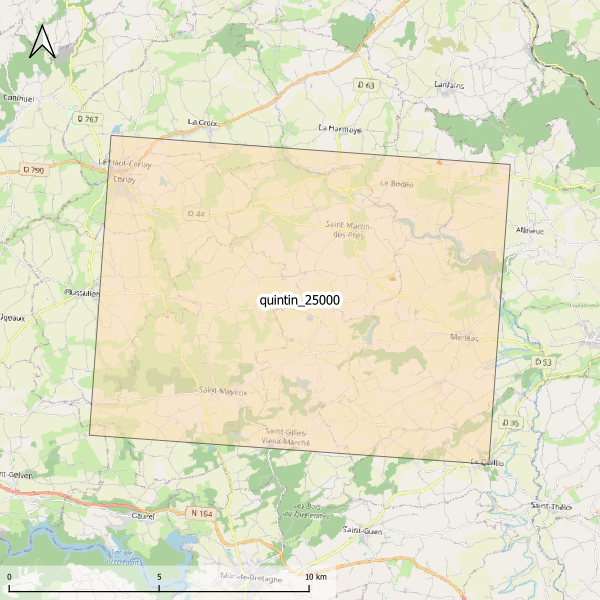
Emprise de la carte pédologique de Quintin au 1/25000. La donnée de base, au format vectoriel, n'est pas publiée.
-
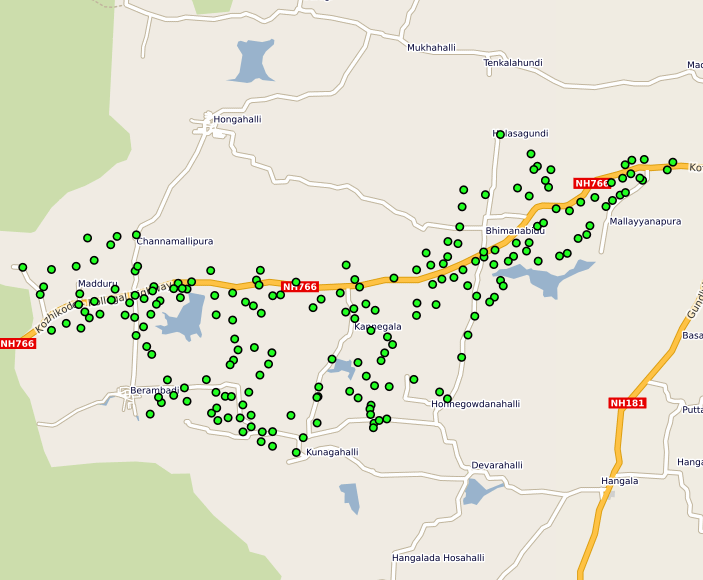
This vector map indicate the Berambadi Monitoring Borewell Locations
-
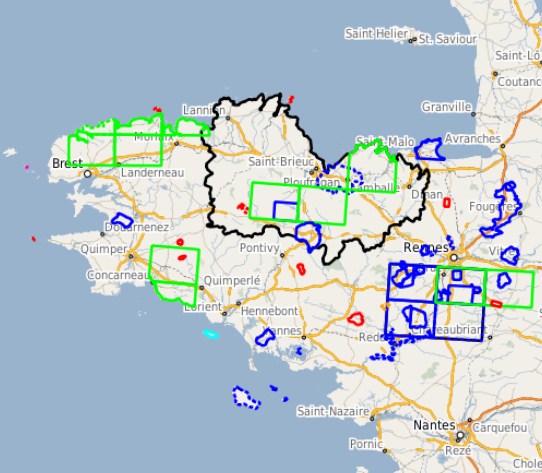
Cette couche représente l'emprise des cartes pédologiques existantes en Bretagne, aux échelles plus fines que le 1/250 000. Ces cartes couvrent environ 45% environ du territoire breton à des échelles allant du 1/100 000 au 1/5 000. Ces cartes ont été réalisées entre 1970 et 1990 pour la plupart, afin de répondre à des thématiques diverses (valeurs es terres agricoles, secteur de référence drainage, connaissance des sols, plans d’épandage…). Ces cartes sont disponibles sous plusieurs formats : image ou vectoriel, avec le cas échéant une table attributaire plus ou moins complète. La légende distingue d'une part le format (nature du trait de contour de la carte pédologique) et d'autre part l'échelle (couleur du trait de contour de la carte pédologique). La table attributaire se compose des champs suivants : - NOM : Nom de la carte composé de sa localisation et de l'échelle correspondante - FORMAT : Format de la carte : scan ou vecteur - ECHELLE : Échelle de la carte - DEPART. : Département(s) dans le(s)quel(s) la carte se situe - DATE : Année de publication de la carte - AUTEUR : Auteur de la carte
-
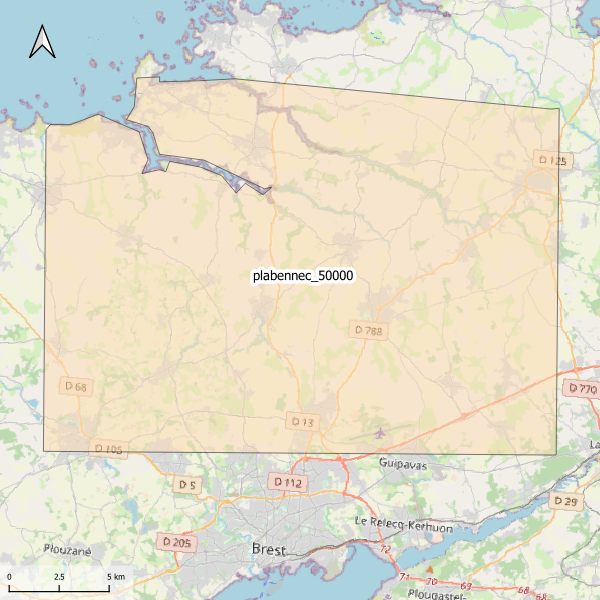
Emprise de la carte pédologique de Plabennec au 1/50000. La donnée de base, au format image scannée, n'est pas publiée.
-
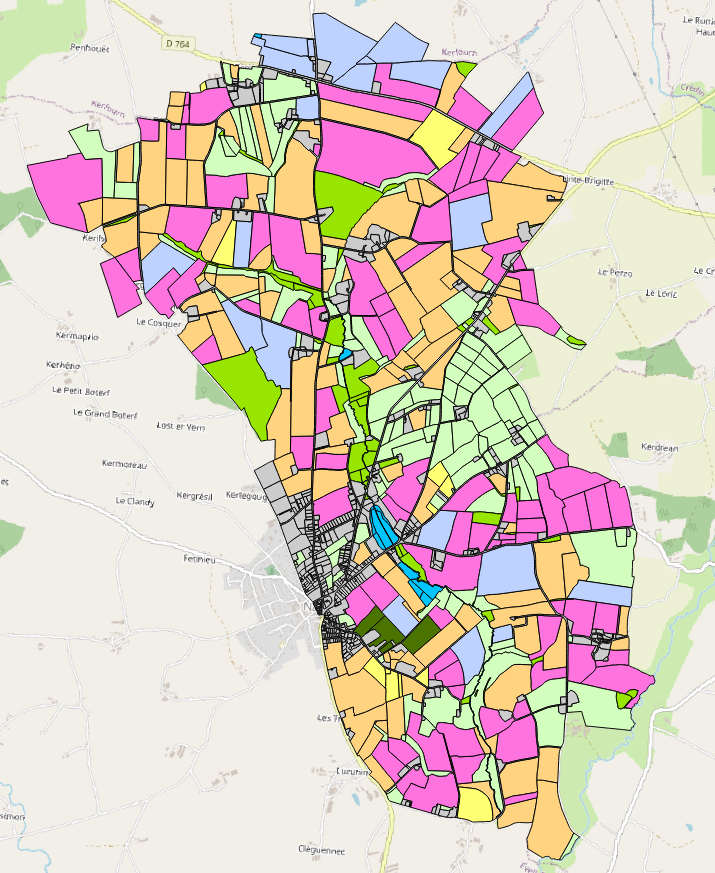
Occupation des sols 2022 du bassin versant du site de Naizin dans le Morbihan dans le cadre de l'Observatoire de Recherche en Environnement (ORE) AgrHyS d'INRAE. Le parcellaire est issu du cadastre de 2013. Les dessertes ont été redessinées à partir des orthophotos IGN de 2013 et le parcellaire a été découpé en fonction d’une zone tampon autour de ces dessertes. Les parcelles 2013 peuvent être découpées mais jamais regroupées. Toutes les entités géographiques élémentaires ont un identifiant unique sur l’ensemble des années. Champs de la table d’attribut : • ID_2022 : identifiant de la parcelle pour l’année 2022 • ID2_2022 : identifiant "bis" (lors de subdivision culturale) de la parcelle pour l'année 2022 • TYPE_22 : code principal de l’occupation des sols • S_TYPE_22 : code secondaire de l’occupation des sols • ID_PARCEL : identifiant numérique et non significatif par parcelle du RPG 2022 • CODE_GROUP : code du groupe de cultures du RPG 2022 • CODE_CULTU : code du groupe de cultures majoritaire du RPG 2022 • CULTURE_D1 : code de la culture dérobée (culture intercalée entre 2 moissons de culture principale) sur la parcelle. • CULTURE_D2 : code de la seconde culture dérobée (culture intercalée entre 2 moissons de culture principale). • SURF_PARCEL : surface en hectares de la parcelle La nomenclature de ces codes des types et sous-types a été définie dans le programme ANR-12-AGRO-0005 MOSAIC : https://anr.fr/Projet-ANR-12-AGRO-0005. Leurs descriptions peuvent être télécharger ici : https://geosas.fr/metadata/ore/xls/legendes_osol_naizin.xlsx. Les occupations des sols sont issues des données par parcelles du Registre Parcellaire Graphique (RPG) de l’année 2022. Les limites des parcelles ont été mises en concordance avec le parcellaire de 2013.
-

Dans le cadre du projet Biomonitoring et de l'observatoire Sélune ont été disposées des stations pilotes le long du cours principal de la Sélune, réparties de l’amont à l’aval des barrages hydroélectriques. Trois stations se situent dans les anciennes retenues des barrages, les deux autres, dites de référence, sont hors zone d'influence des anciens barrages (l'une étant en aval et l'autre en amont). Dans ces stations, les biocénoses aquatiques (incluant macroinvertébrés benthiques, biofilms, macrophytes...) sont suivies. 2 campagnes d'échantillonnage (printemps et automne) de macroinvertébrés benthiques (mib) sont réalisées depuis septembre 2014. Lors de chaque campagne, 2 protocoles d'échantillonnage sont mis en oeuvre : - suivant la norme NF T90-333 qui permet le calcul de l'IBG-DCE et l'I2M2 ("SURBER") - via des substrats artificiels immergés pendant 1 mois ("SUBART"), afin de se focaliser sur la mesure de « l’effet des barrages ». Le protocole est décrit dans : Piscart C., Moreteau, J.C., Beisel J.N. (2006). Monitoring changes in freshwater macroinvertebrate communities along a salinity gradient using artificial substrates. Environmental Monitoring and Assessment 116: 529-542. Cette couche détaille les taxons de macroinvertébrés benthiques et leurs abondances obtenus après analyse (selon la norme NF T90-388). Ces données sont distribuées par campagne et par secteur. Les taxons présentant l’ensemble des critères morphologiques clairement visible et caractéristique permettant l’exactitude de leur détermination et un état de conservation irréprochable sont intégrés à la collection de référence de l’Observatoire Sélune. Celle-ci est consultable sur demande (cf. point de contact). La détermination des taxons s'appuie sur la version v17 de la référence TAXREF. Le jeu de données est actuellement sous embargo.
-
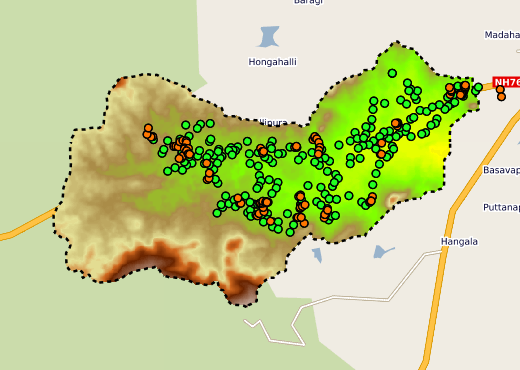
International Action AICHA - Adaptation of Irrigated Agriculture to Climate Change in India. Berambadi Site.