Topic
 

environment

136 record(s)
 
Type of resources
Available actions
Topics
Keywords
Contact for the resource
Provided by
Years
Formats
Representation types
Update frequencies
status
Scale
Resolution
From 1 - 10 / 136
  • Categories  

    The restoration of the Sélune river continuum after the dams were demolished will allow colonization of the upper reaches of the basin, which were previously inaccessible to eels. Before the demolition, two main tributaries were used by amphihaline fish for reproduction, in addition to the main river: the Beuvron and the Oir. The eel population of the Sélune was monitored in the pre-demolition phase by abundance index campaigns carried out in 2013, 2015, 2019, and then every year since 2021, on a network of stations covering the entire Sélune river system. These data make it possible to estimate changes in eel abundance along the Sélune and its tributaries and their size structure before and after the destruction of the dams. The inventory is carried out in early September, every other year, then every year since 2021, using electric fishing equipment and landing nets. Thirty fishing points are carried out for a minimum of 30 seconds. A fishing station covers approximately 100 meters of river. All eels caught are anesthetized and undergo biometric measurements (weight, length, horizontal and vertical eye diameter, determination of yellow or silver stage). All eels are released directly at the fishing site. This sheet refers to two layers, one showing only the study areas and their location, and the other specifying the concept of capture sessions.

  • Categories  

    The opening of the dams will have a significant impact on trout populations in the Sélune. Restoring the river's ecological continuity will alter population flows by allowing amphihaline sea trout to migrate further upstream and native trout to move downstream and upstream of the dams. The trout population is monitored at a network of stations covering the entire Sélune basin using an abundance index, which is carried out every two years. The field campaigns comply with the Vigitruite® fishing protocol, developed by INRA and intended for use throughout France. This abundance index, relative to the area of favorable habitats in the watercourse, makes it possible to assess the quantity of young trout present in the river, resulting from natural reproduction in previous years. This table provides individual data on trout caught according to the year of study.

  • Categories  

    Microbial communities play a major role in the functioning of ecosystems: they are at the base of the food chain (primary production) and participate in the degradation of organic matter. These communities are also known to respond rapidly to environmental changes. Like macro-invertebrates, they can be used as ecological indicators. Benthic diatoms are the main photosynthetic organisms in this biological community. The relative abundance of the various species is used to calculate an environmental quality index (EQI). Major differences in communities between the upstream and downstream zones were observed when the dams were in place. These differences will change once the dams are removed. As part of the Sélune observatory, pilot stations have been set up along the main course of the Sélune, distributed from upstream to downstream of the hydroelectric dams. Three stations are located in the former reservoirs of the dams, while the other two, known as the reference stations, are outside the area of influence of the former dams (one downstream and the other upstream). At these stations, aquatic biocenoses (including benthic macroinvertebrates, biofilms, macrophytes, etc.) are monitored. Since September 2014, the stations are ideally sampled every month from April to October (7 annual surveys) using artificial substrates (glass slides placed in the water). In addition to the diatom survey (floristic list, IBD calculation), the chlorophyll-a concentration is measured. This layer shows the location of the study sectors used to monitor photosynthetic biofilms and the campaigns carried out.

  • Categories  

    The opening of the dams should impact the functioning of Atlantic salmon populations migrating up the Sélune River and its tributaries. Restoring the river's ecological continuity will alter population flows by allowing amphihaline sea trout to migrate further upstream and native trout to move downstream and upstream of the dams. The trout population is monitored at a network of stations covering the entire Sélune basin using an abundance index, which is carried out every two years before 2021 and every year since then. Field campaigns comply with the fishing protocol developed by INRAE and OFB. The aim of this method is to estimate the abundance of juvenile Atlantic salmon (Salmo salar) at a station (or sector). This protocol targets juveniles of the year (aged 0+) whose abundance reflects the renewal of generations within the population (or recruitment) and survival after the embryonic development phases under gravel and the first months of life in the open environment. Field campaigns are carried out by INRAE and the Fédération de la Manche et d'Ille-et-Vilaine pour la Pêche et la Protection du Milieu Aquatique (FDAPPMA35). This dataset provides the locations of these study sectors for IAS fishing sessions in the Sélune watershed by fishing session.

  • Categories  

    Dams cause significant changes to the hydrological regime, water temperature, and biological and biogeochemical flows. This is the case for the Vezins and La Roche qui Boit dams, located on the main course of the Sélune River, which resulted in the existence of two reservoirs between 1919 and 2022 for La Roche qui Boit and between 1932 and 2019 for Vezins. Since the end of the last emptying of the La Roche qui Boit dam at the end of 2022, these two lakes no longer exist in the valley landscape. This layer represents the two reservoirs as they were referenced in 2017, i.e. before the start of the dismantling work on the two hydroelectric dams on the Sélune. Among the attribute data associated with these two entities, the length is based on a calculation made by the Sélune project team using the reference points established across the entire watershed (and therefore across the entire course of the Sélune) and their knowledge of the areas of influence of the lakes/natural watercourse.

  • Categories  

    The spawning grounds of the sea lamprey Petromyzon marinus are located within the perimeter of the Sélune Observatory. As this species is migratory, its colonisation of the Sélune river and its tributaries will probably be influenced by the removal of the Sélune dams. The spawning grounds are characterised by a depression accompanied by a sediment ejection dome immediately downstream. The stones returned to the dome are lighter, making the nests easily visible and identifiable for up to several weeks after spawning. This data is available for the years 2015, 2019, 2020, 2021, 2022, 2023, 2024 and 2025. The Sélune Observatory's activity reports (see attached links) give details of the prospecting conditions.

  • Categories  

    The re-establishment of the river continuum on the Sélune after the dams have been levelled will enable colonization of the upper reaches of the basin, which were previously inaccessible to eels. Before the dams were levelled, two main tributaries were used by amphihaline fish for reproduction, in addition to the main river: the Beuvron and the Oir. The eel population of the Sélune was monitored in the pre-flushing phase by abundance index campaigns carried out in 2013, 2015, 2019 on a network of stations covering the entire Sélune hydrographic network. Since 2021, this network of stations has evolved to monitor changes in the part of the watershed accessible following the dismantling of the 2 dams. These data enable us to estimate changes in eel abundance along the Sélune and its tributaries, as well as their size structure before and after the removal of the dams. The inventory is carried out in early September, every other year between 2013 and 2019, then every year since, using an electric fishing device and dip nets. Thirty thirty-second fishing stations are set up. A fishing station comprises approximately 100 meters of river. All eels caught are anaesthetized and biometric measurements are taken (weight, length, horizontal and vertical eye diameter, determination of yellow or silver stage). All eels are released directly at the fishing site. Two different protocols were implemented: the Eel Abundance Index (Pottier and Chapon, 2022) at 23 stations and exhaustion fishing at eight other stations (IAA01 to IAA08) on the Oir River and some of its tributaries, according to an internal protocol. This layer provides station abundances by fishing session.

  • Categories  

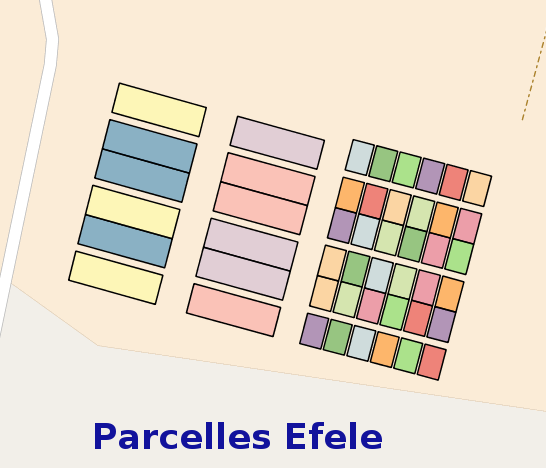
    In 2020, scientific plots were set up, marked out on the ground with colored stakes. These plots are intended to facilitate scientific monitoring, particularly of renaturation. These plots represent privileged areas for scientists, where no sediment or vegetation disturbance is planned until the end of the Sélune program.

  • Categories  

    The opening of the dams will have a considerable impact on the functioning of trout populations in the Sélune. Restoring the river's ecological continuity will modify population flows, allowing amphihaline sea trout to migrate further upstream, and native trout to move upstream and downstream of the dams. The trout population is monitored at a network of stations covering the entire Sélune basin, using an abundance index carried out every 2 years. Field campaigns follow the Vigitruite® fishing protocol, developed at INRAE for use throughout France. This index of abundance, related to the surface area of favorable habitats on the watercourse, makes it possible to evaluate the quantity of trout present in the river, resulting from natural reproduction in previous years. Field campaigns are carried out by INRAE and the Fédération d'Ille-et-Vilaine pour la Pêche et la Protection du Milieu Aquatique (FDAAPPMA35). This layer shows the locations of these study sectors by year of study : 2012, 2014, 2018, 2020, 2022, 2023, 2024 et 2025.

  • Categories  

    Benthic macro-invertebrates (insects, crustaceans, molluscs, worms) form an important link in the food chain. As part of the Sélune observatory, pilot stations have been set up along the main course of the Sélune, distributed from upstream to downstream of the hydroelectric dams. Three stations are located in the former reservoirs of the dams, while the other two, known as the reference stations, are outside the area of influence of the former dams (one downstream and the other upstream). At these stations, the aquatic biocenoses (including benthic macroinvertebrates, biofilms, macrophytes, etc.) are monitored. The parameters monitored are the taxonomic composition of the communities at 5 stations in the main river, located upstream, downstream and in the new lotic habitats. The sampling frequency involves two annual sampling campaigns (spring and autumn). The protocols implemented are the installation of 4 artificial substrates (SUBART) per station and a survey after 1 month of immersion as well as 12 Surber samples per station, in accordance with standard NF T 90-333 (2016), allowing the calculation of the I2M2 in accordance with standard NF T 90-388 (2020) and Mondy et al. 2012, 2012. This layer shows the location of the study sectors used to monitor benthic macroinvertebrates and the campaigns carried out. This monitoring was finalised with the latest field acquisitions in 2025.