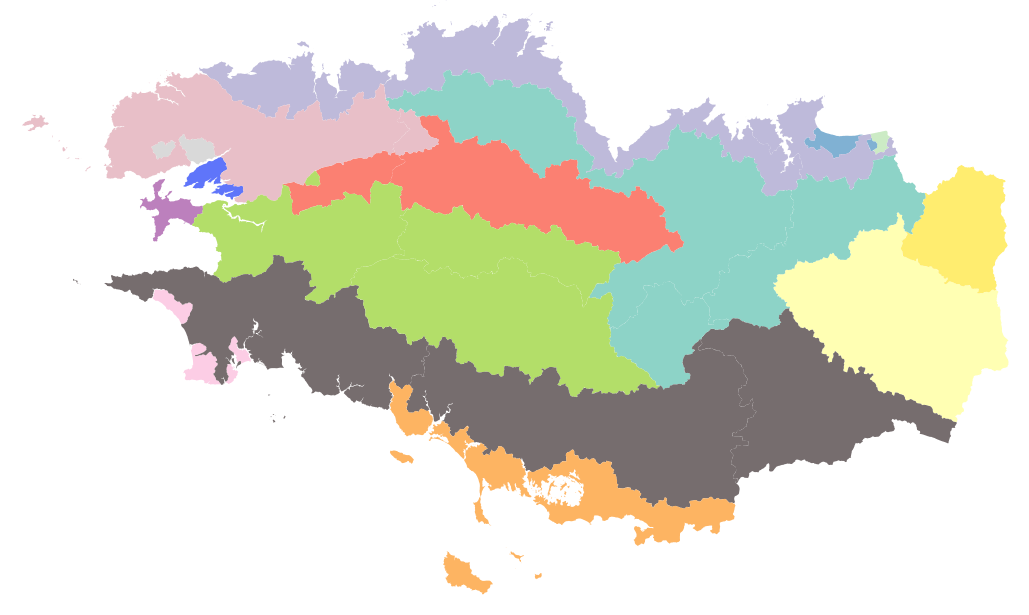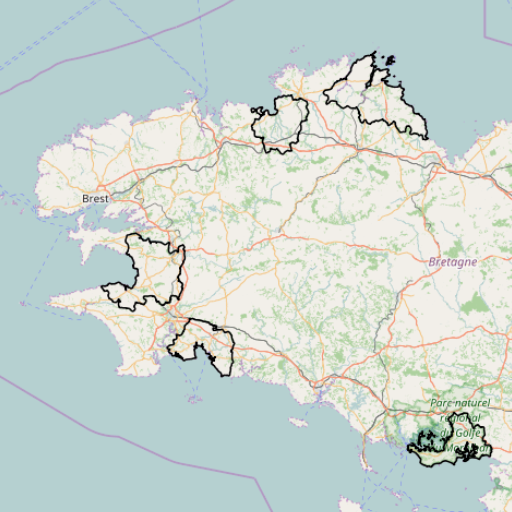
maps
Type of resources
Available actions
Topics
Keywords
Contact for the resource
Provided by
Years
Formats
Representation types
Update frequencies
status
Service types
Scale
-
This project aims to develop and apply a non-invasive method for monitoring migratory fish flows in the Sélune River. The development of this method is based on the analysis of images and videos taken by a hydroacoustic camera positioned in the watercourse.
-
-
This project compares the implementation, acceptance, and progress of dam removal projects in France, using the example of the Sélune, and in the United States, where several similar removal projects have taken place.
-
In a nutshell: The food web project takes a broad look at the aquatic communities found in the Sélune River, ranging from microorganisms to fish, in both its tributaries and the river itself, from its source to where it flows into the estuary. The approach aims to study the interactions between these biological components, with the primary objective of understanding the overall functioning of the ecosystem. The goal is to understand the balances within aquatic ecosystems, from the headwaters of the watershed to the lower reaches of the river, both before (current state) and after (river restoration) the restoration of continuity through the removal of dams. Objective: to answer the following questions: · What role do dams and their reservoirs play in shaping aquatic communities within the river and in the functioning of this ecosystem? · How does the river ecosystem recover at the exact location of a dam reservoir after it has been drained? · What roles do certain key species (particularly amphihaline fish and invasive species) play in ecological balances? · What consequences can be expected from dam removal operations, from the headwaters to the estuary entrance, on these communities and the functioning of the river ecosystem reconnected to the ocean? Methods: inventories; physicochemical characterization; functional ecosystem analysis; stable isotope analysis; food web analysis Data: Measurements of water’s physicochemical quality Community inventories Estimation of (1) the degradation of coarse organic matter (tree leaf litter) via the detritus pathway, and (2) the photosynthetic activity of microorganisms and biofilms in the algal pathway. Data from isotopic analyses of communities; identification of energy sources (food, carbon cycle) in food webs Role of keystone species (invasive crayfish and fish predators) Analysis of food web structure
-
In a nutshell: Restoring the connectivity of inland water bodies is one of the key measures of the Water Framework Directive, and must be achieved either by modifying existing barriers or by removing them entirely. This second solution was chosen for the Sélune River as part of an operation that is subject to scientific monitoring. The goal of this monitoring, within the context of studying biocoenoses, is to help us understand the consequences of this removal on migratory and invasive species. The removal of dams and the restoration of river connectivity can have both positive and negative consequences. Objectives This project aims to provide answers to the following interconnected questions: Which species are taking advantage of the removal of dams to (re)colonize the Sélune and its tributaries? What are the consequences of restoring river continuity on species distribution and their demographic and genetic structure at the watershed scale? What are the consequences of (re)colonization dynamics on the traits of the species concerned? Methods: scientific fishing; hydroacoustic camera monitoring; DNA analysis; demographic analysis Data - Trout fishing (IAT) - Eel fishing (IAA) - Lamprey fishing (IAL) - All-species fishing (PTE) - Crayfish fishing (IAE) - Identification of upstream-migrating Atlantic salmon - Otolith sampling from smolts - Counts of lamprey and salmon spawning grounds - Inventories of aquatic plant communities - Crayfish detection
-
The aim of this project is to understand the exchanges between the groundwater and the water in the Sélune river. This knowledge will help prevent the physical, chemical, and biological changes that restoring continuity will cause to the water quality of the Sélune. Data: - water level records - temperature measurement records at various locations in the river sediments and in the piezometers - data from differential pressure sensors at certain points along the river, - data on the concentration of chemical elements (N, P, dissolved gases, etc.) in the sediments - fiber-optic data - Lidar campaign data Sites: At the start of the project, there are two main sites, each covering a few hundred meters, located nearby: - the Signy Bridge - the Biards Bridge Additional sites may be added later, if logistical constraints (such as the portability of certain measurement protocols) permit.
-
This project assesses the impact of restoring connectivity between fish populations following the removal of dams on the Sélune River. It is based on the calculation of a genetic fragmentation index for five fish species. Data: - Genetic analysis and F-index
-
The goal of this project is to establish methods for monitoring the return of iconic migratory fish, such as salmon and eels, to the Sélune Valley following the restoration of its connectivity.
-
In few words : The primary objective of the biomonitoring project “Impact of Dredging on the Animal and Plant Communities of the Sélune” is to establish a baseline assessment of the biological quality of the Sélune upstream and downstream of the two dams, as well as within the reservoirs. It also aims to identify risks (acute exposure) during the work to stabilize contaminated sediment from the Yvrande. It thus seeks to answer the following questions: How does the lotic ecosystem recover after the disappearance of a reservoir, and what new ecological equilibria result? What will be the effects of the dredging work on the quality of the environments and their consequences on the biocoenoses that develop there? This project assesses the impact of dams on aquatic animal and plant communities in relation to water quality (zooplankton, macroinvertebrates, phytoplankton, periphyton, macrophytes). Methods : IBMR ; IBGN ; IBD ; suivi des biofilms ; caractérisation physico-chimique Data : - Monitoring of physicochemical conditions (water temperature, conductivity, pH, etc.) - Concentrations of nitrates, silicates, nitrogen, and total phosphorus - Monitoring of invertebrate communities - Monitoring of phytoplankton and zooplankton communities, and measurement of phytoplankton biomass - Monitoring of biofilm (2015–2017) - Monitoring of aquatic plants (1996) - Floristic surveys of aquatic plants (2015, 2017) - Toxicological characterization of fish in the Vezins Reservoir - Analysis of fish stomach contents (GCA)
-
In a nutshell: This research project focuses on the social and geographical dimensions of the ecological restoration of the Sélune River. Its objective is to assess the current state of the landscapes, land uses, and practices in the Sélune Valley (and more specifically in the gorge section) prior to the removal of the dams, and then to monitor the changes brought about by the removal: the state of both material transformations (land use, practices, visitor traffic) and conceptual transformations (perceptions, discourse) of the territory in order to assess the impacts of this project and thereby measure its success from the users’ perspective (quality of life, regional development, practices, etc.) to understand, using the example of the Sélune, the difficulties in gaining acceptance and ownership of such a project by various local stakeholders, as well as the challenges related to its definition and implementation. Methods used: surveys, questionnaires, analysis of the local press, photography Data: - A collection of photographs (~40) covering the entire Sélune Valley to track changes in the landscape - Historical photographs and postcards. Photographs will be annotated and geotagged - Inventory of land uses (fishing, recreation, lodging, etc.), analysis of visitor traffic in the gorges, and mapping - Semi-structured interviews will be conducted with representatives of user groups (to gather their opinions) - Text analysis (using Alceste or WordMapper software) of transcribed interviews - Collection of residents’ opinions and assessment of their satisfaction with the project - Corpus of articles published in the regional daily press to track the history of reactions - Collection of information disseminated via other media platforms such as blogs, forums, and websites by various stakeholder groups, particularly fishermen, environmentalists, and opponents of the clearing - Codification of the corpus followed by a lexical and semantic analysis using the TXM platform
Catalogue GéoSAS