 Catalogue GéoSAS
France
Type of resources
Available actions
Topics
Keywords
Contact for the resource
Provided by
Years
Formats
Representation types
Update frequencies
status
Service types
Scale
Resolution
-
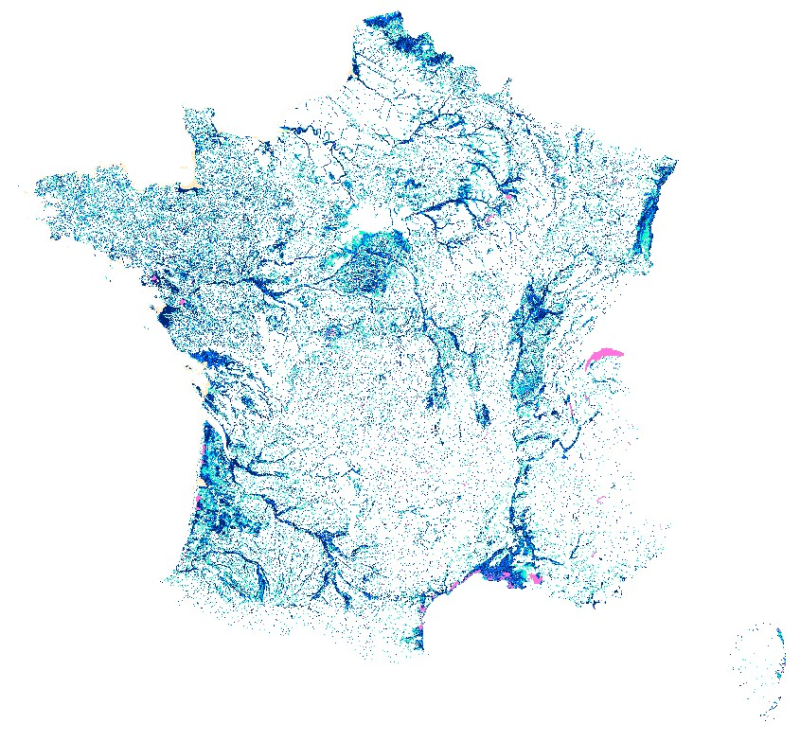
Enveloppes de milieux potentiellement humides en 3 classes de confiance. La prédiction des zones humides est un enjeu majeur pour concevoir et mettre en œuvre une politique nationale cohérente visant à la préservation de ces écosystèmes fragiles mais essentiels qui sont impliqués dans la production de nombreux services écosystémiques. Fortement liée à la situation topographique, l’occurrence des zones humides potentielles est principalement conditionnée par la géomorphologie, les précipitations et la dénivelée au cours d’eau. Cette étude teste à l’échelle de la France métropolitaine le développement et la mise en œuvre d’une méthode fondée sur la combinaison d’un indice topo-climatique (Mérot et al., 2003) avec la dénivelée au cours d’eau pour prédire la distribution spatiale des zones humides potentielles. Pour plus d'informations, consulter la notice accompagnement : https://geosas.fr/metadata/pdf/Notice_MPH_France-1.pdf
-
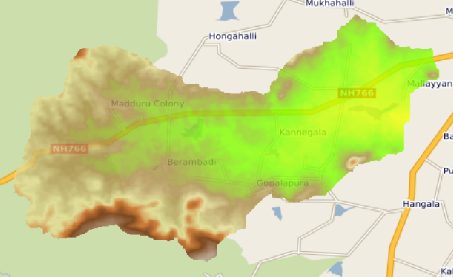
This raster map is the Digital Elevation Model of the Berambadi watershed
-
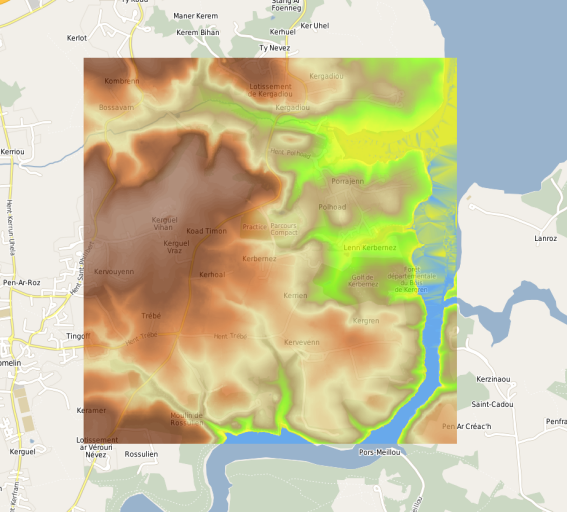
Modèle Numérique de Terrain (MNT) à 5 mètres de résolution calculé par rééchantillonage basé sur la méthode de la médiane de la donnée Litto3D à 1 mètre de résolution. L'emprise géographique du MNT contient l'ensemble du site de l'Observatoire de Recherche en Environnement (ORE) AgrHyS de Kerbernez à Plomelin dans le Finistère.
-
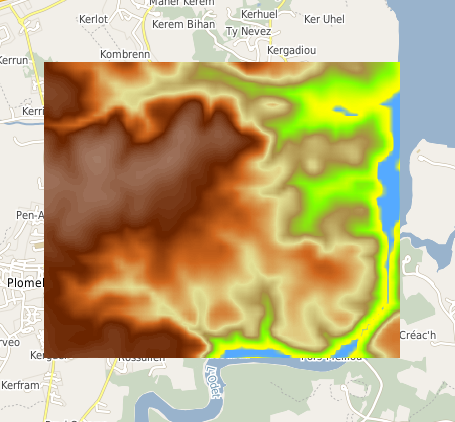
Modèle Numérique de Terrain (MNT) à 10 mètres de résolution calculé par interpolation bilinéaire de la BD ALTI Version 2.0 de l'IGN à 25 mètres de résolution. L'emprise géographique du MNT correspond au site de l'Observatoire de Recherche en Environnement (ORE) AgrHyS de Kerbernez sur la commune de Plomelin dans le Finistère.
-
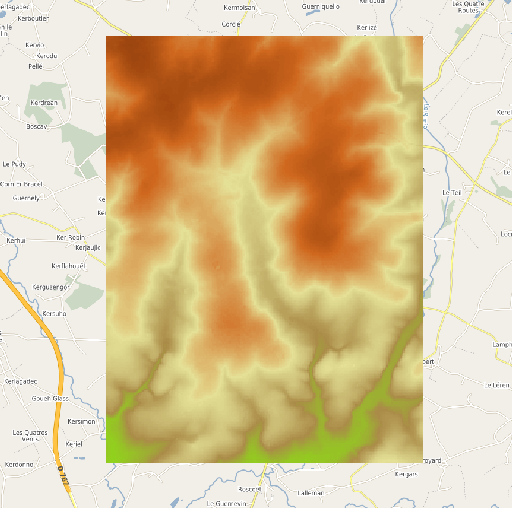
Modèle Numérique de Terrain (MNT) à 25 mètres de résolution extrait de la BD ALTI Version 2.0 de l'IGN à 25 mètres de résolution. L'emprise géographique du MNT correspond au site de l'Observatoire de Recherche en Environnement (ORE) AgrHyS de Naizin dans le Morbihan.
-

Ce projet étudie les traits d’histoire de vie de l’anguille et du flet, deux espèces migratrices qui vivent en rivière et se reproduisent en mer, avant la remise en continuité de la Sélune, afin d’anticiper ses effets par la suite. Données : - Captures d'individus d'anguilles et de flets (réalisées au moins pour dans le cadre de l'Observatoire, pour les anguilles) - Taux de graisse fat meter et extraction au chloroforme ; - Taux d’énergie (bombe calorimétrique sur les tissus musculaires) - Position et niche trophique - Age et taux de croissance - Profil de migration et d’utilisation du bassin - Prévalence et abondance des métazoaires parasites (de façon globale et pour chaque espèce de parasite), diversité des communautés parasitaires - Diversité et état du microbiome intestinal déterminés Sites : 6 sites au total : Sélune (Pêcherie + Roche qui Boit), Oir, Beuvron, Sée, Couesnon, Marais de Dol - Anguilles : 5 sites (Sélune Pêcherie + Roche qui Boit, Oir, Beuvron, Sée) - Flets : 4 sites (Sélune, Sée, Couesnon et Marais de Dol)
-

L’ouverture des barrages devrait impacter le fonctionnement des populations de saumons atlantiques remontant la Sélune ou ses affluents. Le rétablissement de la continuité écologique du fleuve modifiera les flux populationnels en autorisant la remontée plus en amont des saumons atlantiques en aval et en amont des barrages. La population de saumons atlantiques est suivie sur un réseau de stations couvrant l’ensemble du bassin de la Sélune à l'aide d'un indice d’abondance, qui est effectué tous les 2 ans avant 2021 et tous les ans depuis. Les campagnes de terrain respectent le protocole de pêche mis au point par l’INRAE et l'OFB. L’objectif de cette méthode est d’estimer le niveau d’abondance de juvéniles de saumon atlantique (Salmo salar) sur une station (ou secteur). Ce protocole vise les juvéniles de l’année (d’âge 0+) dont l’abondance traduit le renouvellement des générations au sein de la population (ou recrutement) et la survie après les phases de développement embryonnaire sous gravier et les premiers mois de vie en milieu ouvert. Les campagnes de terrain sont assurées par INRAE et les Fédération de la Manche d'Ille-et-Vilaine pour la Pêche et la Protection du Milieu Aquatique (FDAAPPMA50 et FDAAPPMA35). Ce jeu de données fournit les données d'abondances de saumons atlantiques (0+, 1+ , 2+ et cumul) ainsi que l'indice d'abondance saumon ias, par station et par session de pêche.
-

L’ouverture des barrages devrait impacter le fonctionnement des populations de saumons atlantiques remontant la Sélune ou ses affluents. Le rétablissement de la continuité écologique du fleuve modifiera les flux populationnels en autorisant la remontée plus en amont des saumons atlantiques en aval et en amont des barrages. La population de saumons atlantiques est suivie sur un réseau de stations couvrant l’ensemble du bassin de la Sélune à l'aide d'un indice d’abondance, qui est effectué tous les 2 ans avant 2021 et tous les ans depuis. Les campagnes de terrain respectent le protocole de pêche mis au point par l’INRAE et l'OFB. L’objectif de cette méthode est d’estimer le niveau d’abondance de juvéniles de saumon atlantique (Salmo salar) sur une station (ou secteur). Ce protocole vise les juvéniles de l’année (d’âge 0+) dont l’abondance traduit le renouvellement des générations au sein de la population (ou recrutement) et la survie après les phases de développement embryonnaire sous gravier et les premiers mois de vie en milieu ouvert. Les campagnes de terrain sont assurées par INRAE et les Fédération de la Manche d'Ille-et-Vilaine pour la Pêche et la Protection du Milieu Aquatique (FDAPPMA50 et FDAPPMA35). Ce jeu de données fournit les localisations de ces secteurs d'étude pour les sessions de pêche IAS sur le bassin versant de la Sélune par session de pêche.
-

Les frayères de lamproie marine (Petromyzon marinus) sont localisées dans le cadre de l'Observatoire Sélune. Cette espèce étant migratrice, sa colonisation de la Sélune et de ses affluents sera probablement influencée par l'effacement des barrages de la Sélune. Les frayères se caractérisent par une dépression accompagnée d’un dôme d’éjection sédimentaire immédiatement en aval. Les pierres retournées sur le dôme sont plus claires ce qui rend les nids facilement visibles et identifiables jusqu’à plusieurs semaines après le frai. L'identification et le comptage de frayères de lamproies marines se fait via un protocole interne standardisé INRAE. Il s'agit d'un comptage visuel avec pointage GPS par prospection à pied de l’aval vers l’amont sur les affluents, en kayak de l’amont vers l’aval sur le cours principal de la Sélune. Les moyens alloués au comptage des frayères ne permettent pas de couvrir l’ensemble du réseau hydrographique de la Sélune et de ses affluents, les frayères géo localisées en limite amont ne correspondent pas nécessairement au front de colonisation. A partir de 2025, en raison du caractère chronophage de ce suivi, il a été décidé de restreindre et de pérenniser les linéaires à prospecter. Ont donc été prospectés : une section des linéaires à l’aval des barrages (Aval de la Sélune, affluent de l’Oir et aval de l’affluent du Beuvron), le linéaire au sein des anciennes retenues (La Sélune) et une section de linéaire en amont des barrages (La Sélune depuis l’amont des barrages jusqu’à Saint Hilaire du Harcouët ainsi que l’aval de l’affluent de l’Airon). Ce jeu de données permet de rendre compte du linéaire prospecté par campagne, du nombre de frayères identifiés sur chaque linéaire, de la longueur de chaque linéaire et du taux de frayères rapportés à la longueur du linéaire prospecté. Cette données est disponibles pour les années 2015, 2019, 2020, 2021, 2022, 2023, 2024, 2025 et 2026. Les rapports d'activité de l'observatoire Sélune (cf. liens ci-joints) donnent des précisions quant aux conditions de prospection.
-

Les macro invertébrés benthiques (insectes, crustacés, mollusques, vers) forment un important maillon de la chaine alimentaire. Le suivi de ces communautés permet une visualisation rapide d’un changement de conditions environnementales. Dans le cadre du projet Biomonitoring, puis de l'observatoire Sélune ont été disposées des stations pilotes le long du cours principal de la Sélune, réparties de l’amont à l’aval des barrages hydroélectriques. Trois stations se situent dans les anciennes retenues des barrages, les deux autres, dites de référence, sont hors zone d'influence des anciens barrages (l'une étant en aval et l'autre en amont). Dans ces stations, les biocénoses aquatiques (incluant macroinvertébrés benthiques, biofilms, macrophytes...) sont suivies. Les paramètres suivis sont la composition taxonomique des communautés sur 5 stations du cours principal situées à l’amont, à l’aval et sur les nouveaux habitats lotiques. La fréquence d’échantillonnage impliquent deux campagnes annuelles d’échantillonnage (printemps et automne). Les protocoles mis en œuvre sont la pose de 4 substrats artificiels (SUBART) par station et relevé après 1 mois d’immersion ainsi que 12 prélèvements Surber par station, suivant la norme NF T 90-333 (2016), permettant le calcul de l’I2M2 suivant la norme NF T 90-388 (2020) et Mondy et al., 2012. Cette couche donne la localisation des secteurs d'étude utilisés dans le suivi des macroinvertébrés benthiques ainsi que les campagnes réalisées dans le cadre du projet Biomonitoring et de l'observatoire Sélune. ce suivi a été finalisé avec les dernières acquisition terrain en 2025.